Capability stage 02
Manufacturing decisions follow the approved product definition.
The workflow is shown so buyers know which facts are needed. Capacity, MOQ, price and production timing are deliberately not generalized across products.
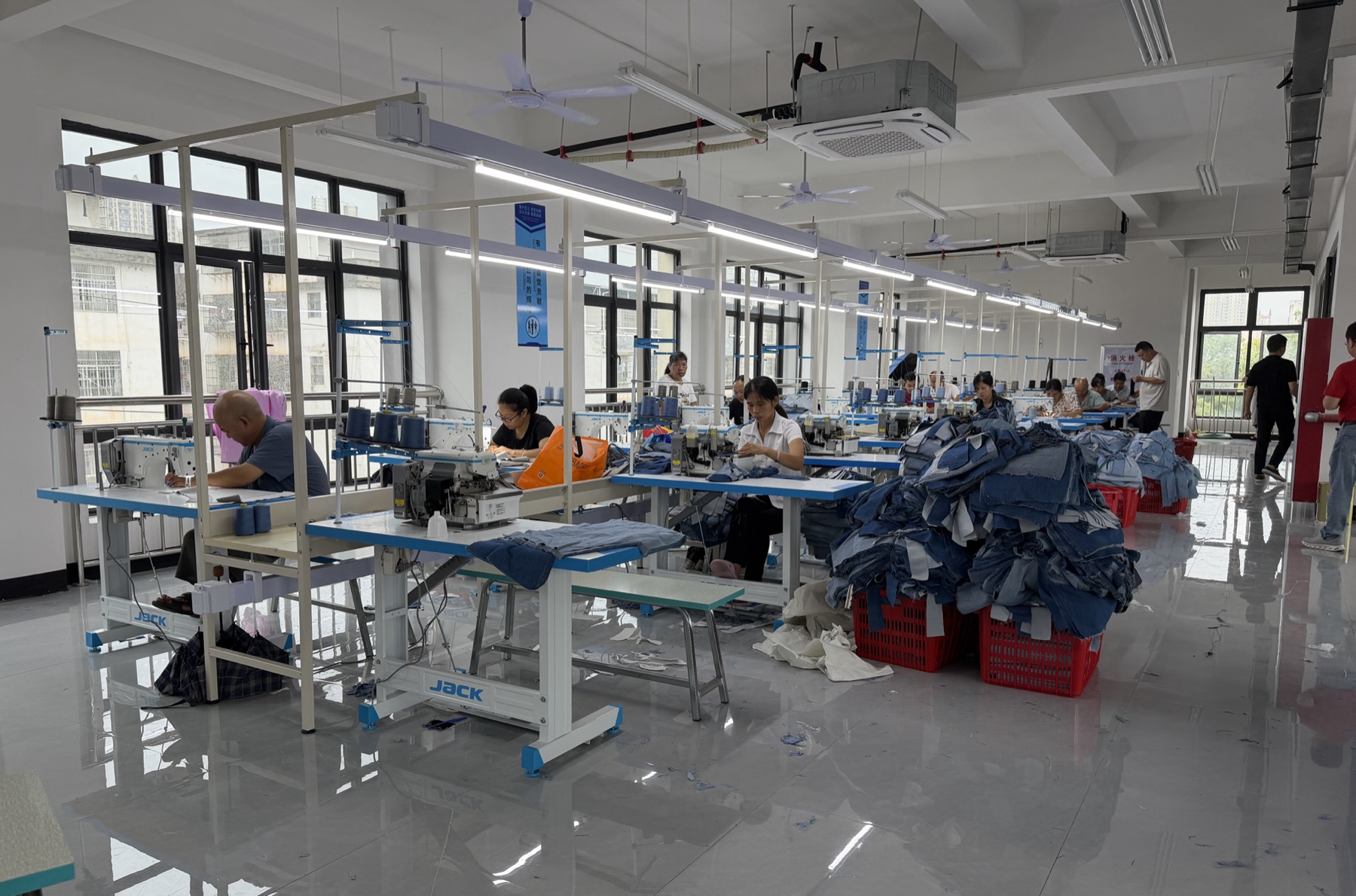
Sewing workshop
Production follows the approved product definition.
The photograph shows the real working environment. Construction details, machine operations and in-line checks remain connected to the agreed sample and specification version.
Interest
A clear brief makes the next decision easier.
Start with the buyer, channel and product role. Then align silhouette, material, construction, size range and brand details.
Decision framework
Eight manufacturing review points.
Use these directions to define the range before price, MOQ, timing or production feasibility is discussed.
Approved sample
Confirm approved sample against the exact style and order rather than relying on a general website statement.
BaselineSpecification version
Confirm specification version against the exact style and order rather than relying on a general website statement.
VersionMaterial availability
Confirm material availability against the exact style and order rather than relying on a general website statement.
MaterialsConstruction risk
Confirm construction risk against the exact style and order rather than relying on a general website statement.
RiskSize range
Confirm size range against the exact style and order rather than relying on a general website statement.
SizingQuantity context
Confirm quantity context against the exact style and order rather than relying on a general website statement.
QuantityPacking requirement
Confirm packing requirement against the exact style and order rather than relying on a general website statement.
PackingTiming requirement
Confirm timing requirement against the exact style and order rather than relying on a general website statement.
TimingFrom brief to approval
A four-step path with clear confirmation points.
Define
Share target market, sales channel, range role and reference styles.
Review
Align silhouette, material direction, construction, color and size context.
Confirm
Confirm feasibility, sample path, MOQ, price and timing against the actual brief.
Approve
Use agreed samples and written specifications as the approval baseline.
Evidence and boundaries
What is stated now—and what waits for review.
Verified or dated on this site
- Company name, address, mobile, emails and website supplied for publication.
- Nine-brand public-assortment report dated 2026-09-10.
- Existing website routes, private inquiry storage and WordPress blog ownership.
Confirmed after the buyer brief
- Product feasibility, materials and technical construction.
- Samples, MOQ, price, timing, packing and delivery requirements.
- Testing, compliance documents and project-specific quality standards.
+86 134 7241 1736 · info@bstarfa.com · david@bstarfa.com
FAQ
Answers that do not overstate the evidence.
What should a first inquiry include?
Include target market, sales channel, product categories, reference images, material direction, colors, size range, brand details and quantity context.
Are MOQ and lead time fixed on this website?
No. MOQ, price, sampling time and production timing are confirmed only after the actual product brief and required materials are reviewed.
Can I send reference images?
Yes. Reference images can clarify silhouette, fit, construction, color and styling intent. They are treated as project information.
Does a market-research signal prove factory capability?
No. Market research describes public retail assortments. Factory feasibility is a separate decision confirmed after technical review.
Can Bstarfa support private-label details?
Share label, trim, packaging and presentation requirements in the brief. The applicable scope is confirmed for the project.
What happens after I submit the form?
The inquiry is stored privately in WordPress for review, and the team clarifies missing information before making commercial commitments.
Action
Send the product and business facts first.
We can then separate what is clear, what needs technical review and what must be commercially confirmed.